

Introduction: A Revolution Forged in Code
In an age where our world grows ever more digital, few inventions have stirred as much fascination, controversy, and innovation as Bitcoin. Conceived in 2008 by the pseudonymous figure Satoshi Nakamoto, Bitcoin has risen from an obscure experiment in cryptography to a global phenomenon that commands headlines, stirs financial markets, and provokes deep philosophical questions about money itself. While critics dismiss it as a speculative bubble, its proponents see it as nothing less than a radical reimagining of what currency can be. To understand Bitcoin is to glimpse the future of finance—a future where trust is coded, transactions are borderless, and the very concept of value is rewritten.
The Genesis of an Idea
At its core, Bitcoin was created as a response to the failures of traditional finance. The 2008 financial crisis shattered trust in centralized institutions and exposed the fragility of the existing monetary system. Satoshi’s white paper, Bitcoin: A Peer-to-Peer Electronic Cash System, outlined a bold vision: a decentralized network that could facilitate transactions without the need for banks, governments, or intermediaries. In essence, Bitcoin returned monetary power to the individual, removing the gatekeepers who for centuries dictated who could store, send, or receive money.
How Bitcoin Works: The Backbone of Blockchain
Bitcoin’s architecture is ingenious yet elegantly simple. It runs on a public ledger called the blockchain—a distributed database maintained by thousands of nodes worldwide. Each transaction is grouped into a ‘block,’ which is verified by a process called mining. Miners use computational power to solve complex cryptographic puzzles, securing the network and earning new bitcoins as a reward. This mining process not only creates new coins but ensures that no single entity can manipulate the system. Unlike fiat currencies, which central banks can print at will, Bitcoin’s supply is capped at 21 million coins, making it inherently deflationary.
The Allure: Why Bitcoin Captivates Millions
Bitcoin’s appeal is multifaceted, attracting tech enthusiasts, libertarians, investors, and those simply curious about the promise of digital wealth. Several factors underpin its enduring allure:
-
Decentralization: No single authority controls Bitcoin, insulating it from government overreach or inflationary monetary policies.
-
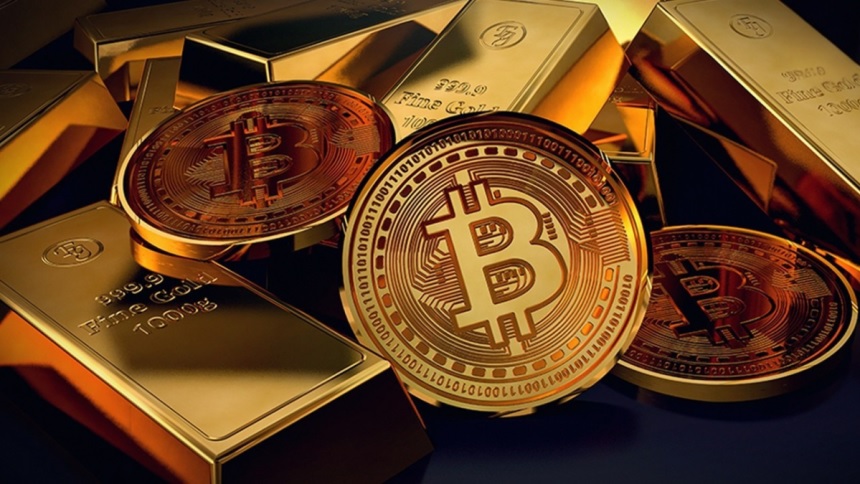
Scarcity: The finite supply creates a digital scarcity akin to precious metals like gold, hence the nickname ‘digital gold.’
-
Transparency and Security: Every transaction is recorded on the blockchain, viewable by anyone, yet secured by advanced cryptography.
-
Borderless Payments: Bitcoin can be sent anywhere in the world, bypassing traditional banking systems and their fees.
Bitcoin as an Investment: Store of Value or Risky Gamble?
Over the past decade, Bitcoin has attracted hordes of investors seeking outsized returns. Early adopters saw meteoric gains, transforming modest sums into life-changing fortunes. Institutional investors and hedge funds have joined the fray, adding legitimacy to what was once deemed a fringe asset. However, Bitcoin’s notorious price volatility cannot be ignored. Swings of 20% in a single day are not uncommon, prompting heated debates over whether it is truly a ‘store of value’ like gold or simply a speculative plaything.
For seasoned investors, Bitcoin is a hedge—an insurance policy against currency devaluation and geopolitical instability. For critics, it remains a bubble, driven by hype rather than fundamentals. The truth likely lies somewhere in between: Bitcoin is both an experiment in decentralized trust and an asset that rewards those who can stomach its dramatic ups and downs.
Beyond Currency: Bitcoin’s Impact on Technology and Society
Bitcoin’s influence extends far beyond its price chart. It sparked the birth of an entire ecosystem of cryptocurrencies and blockchain projects, each aiming to solve different problems—smart contracts, decentralized finance, and tokenized assets among them. More profoundly, Bitcoin has ignited a global conversation about privacy, freedom, and the role of centralized power in our financial lives.
In countries with unstable currencies or authoritarian regimes, Bitcoin has become a lifeline. Citizens in Venezuela, Nigeria, and Ukraine, for instance, have used Bitcoin to preserve wealth amid hyperinflation or to bypass draconian capital controls. For them, Bitcoin is not just an investment—it is a tool for survival and empowerment.
Environmental Concerns: The Energy Debate
No discussion of Bitcoin is complete without acknowledging its environmental footprint. The energy-intensive mining process has drawn criticism, with detractors pointing out that the Bitcoin network consumes as much electricity as some small nations. This has spurred innovation within the industry, driving miners toward renewable energy sources and sparking debates about whether the trade-off—an open, censorship-resistant monetary system—justifies the carbon cost. Solutions such as ‘proof of stake’ are being explored in other blockchain networks, but Bitcoin’s unique design remains steadfast in its reliance on proof of work, a feature many believe underpins its security.
The Road Ahead: Regulation, Innovation, and the Quest for Mainstream Acceptance
Bitcoin’s future is as intriguing as its past. Regulatory clarity will play a decisive role in shaping its adoption. Governments worldwide are grappling with how to integrate this borderless asset into existing legal frameworks without stifling innovation. Some nations, like El Salvador, have embraced Bitcoin as legal tender, while others continue to debate bans or tight restrictions.
Meanwhile, technological advancements such as the Lightning Network promise to address Bitcoin’s limitations, enabling faster and cheaper transactions, thus inching closer to its original vision as a medium of exchange rather than merely a store of value.
Conclusion: An Idea Whose Time Has Come
Bitcoin stands as one of the most disruptive ideas of the 21st century—a digital experiment that has defied skeptics, reshaped markets, and forced us to reconsider the very nature of money. Whether it ultimately becomes the world’s reserve currency, a niche store of value, or a stepping stone to more advanced digital currencies, its impact is undeniable.
In the end, Bitcoin is not just code or coins; it is a movement—a testament to what can happen when innovation, cryptography, and a yearning for financial freedom collide. The story of Bitcoin is still being written, block by block, transaction by transaction, by people across the globe who believe that money should belong not to the few, but to all.

Related posts
Recent Posts
- Crypto Futures Trading Market Microstructure Capital Efficiency and the Institutional Shift February 19, 2026
- Understanding the Rise of Crypto Exchanges and Their Impact on the Financial Landscape January 6, 2026
- How to Choose a Thoughtful Crypto‑Themed Gift Without Breaking the Bank November 12, 2025
- Breaking down Crypto Leverage: A Blueprint for Courageous Traders October 23, 2025
- Why blockchain news media matters when everyone is asking “how can i get free bitcoins” October 13, 2025
- The Digital Renaissance: Understanding Cryptocurrency in the Modern Economy July 15, 2025
- Ethereum’s Expanding Realm: How a Decentralized Platform Is Shaping the Digital Future July 13, 2025
Archives
- February 2026 (1)
- January 2026 (1)
- November 2025 (1)
- October 2025 (2)
- July 2025 (9)
- June 2025 (8)
- May 2025 (10)
- December 2024 (1)
- November 2024 (1)
- August 2024 (1)
- July 2024 (1)
- May 2024 (1)
- April 2024 (1)
- March 2024 (1)
- February 2024 (1)
- November 2023 (4)
- September 2023 (1)
- August 2023 (4)
- July 2023 (1)
- April 2023 (1)
- February 2023 (1)
- January 2023 (1)
- November 2022 (1)
- September 2022 (1)
- August 2022 (1)
- July 2022 (3)
- June 2022 (1)
- April 2022 (2)
- March 2022 (1)
- February 2022 (2)
- January 2022 (1)
- November 2021 (1)
- October 2021 (2)
- September 2021 (3)
- August 2021 (2)
- July 2021 (3)
- June 2021 (2)
- May 2021 (3)
- April 2021 (1)
- March 2021 (3)
- February 2021 (2)